
As a DevOps and SRE engineer, I have spent a lot of time building automated, reliable pipelines and cloud platforms. Over recent years, I have been applying the same principles to machine learning and AI projects.
One of those projects is CarHunch, a vehicle insights platform built on MOT data at scale. Building it made one thing clear: DevOps practices map directly onto MLOps - versioning datasets and models, tracking experiments, and automating deployment workflows.
To make that bridge easy to explore, this post presents a minimal, reproducible demo using MiniLM and MLflow.
Source code: github.com/DonaldSimpson/mlops_minilm_demo
The quick way: make run
The quickest path is the included Makefile. If you have Docker installed, run:
# clone the repo
git clone https://github.com/DonaldSimpson/mlops_minilm_demo.git

cd mlops_minilm_demo

# build and run everything (training + MLflow UI)
make run
That single command will:
- Spin up a containerised environment
- Run the training script (MiniLM embeddings + Logistic Regression)
- Start the MLflow tracking server and UI
make run.Once it is up, open http://localhost:5001 to explore logged experiments.
What the demo shows
- MiniLM embeddings convert short MOT-style notes into vectors
- A Logistic Regression classifier predicts pass/fail
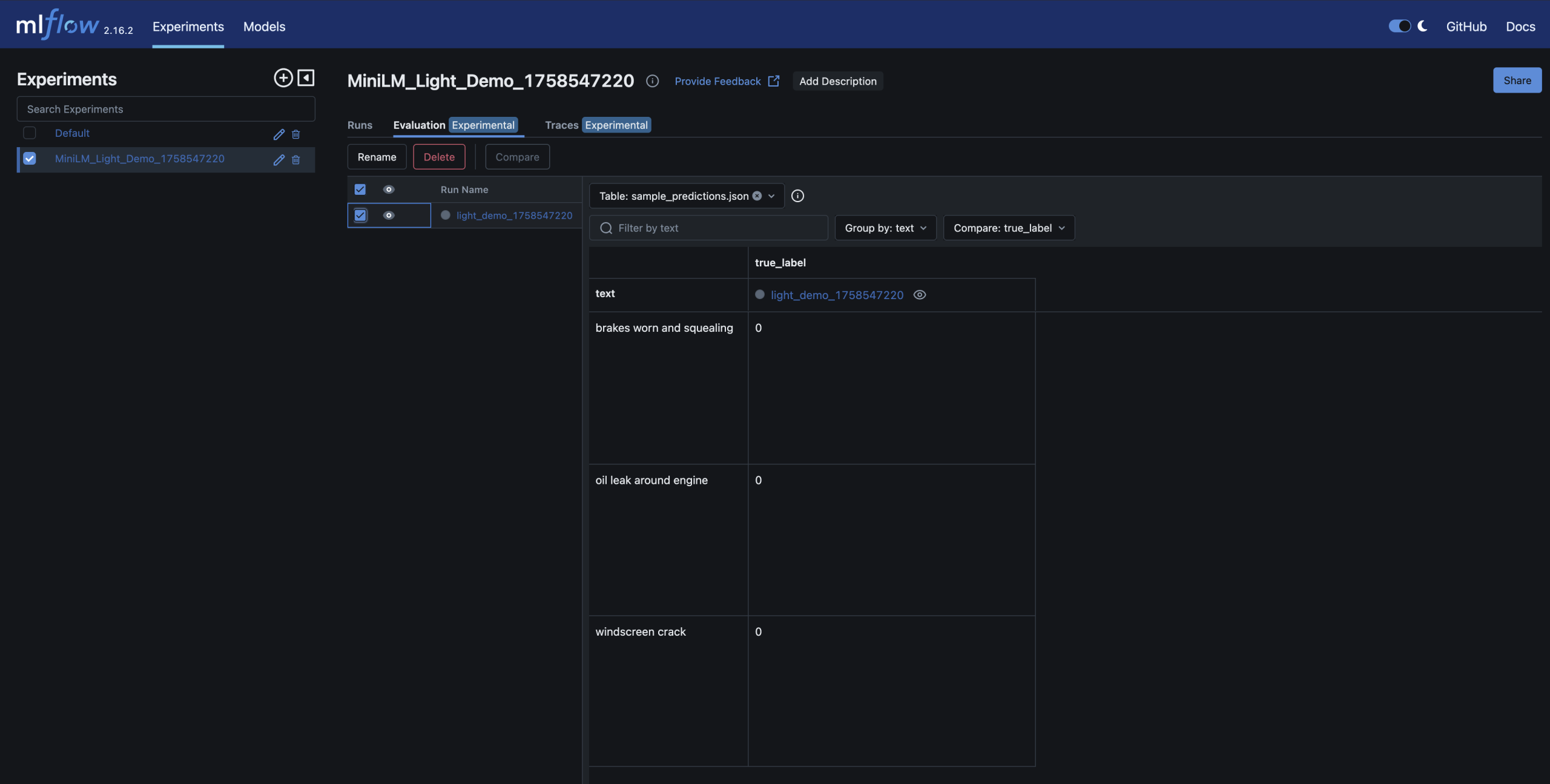
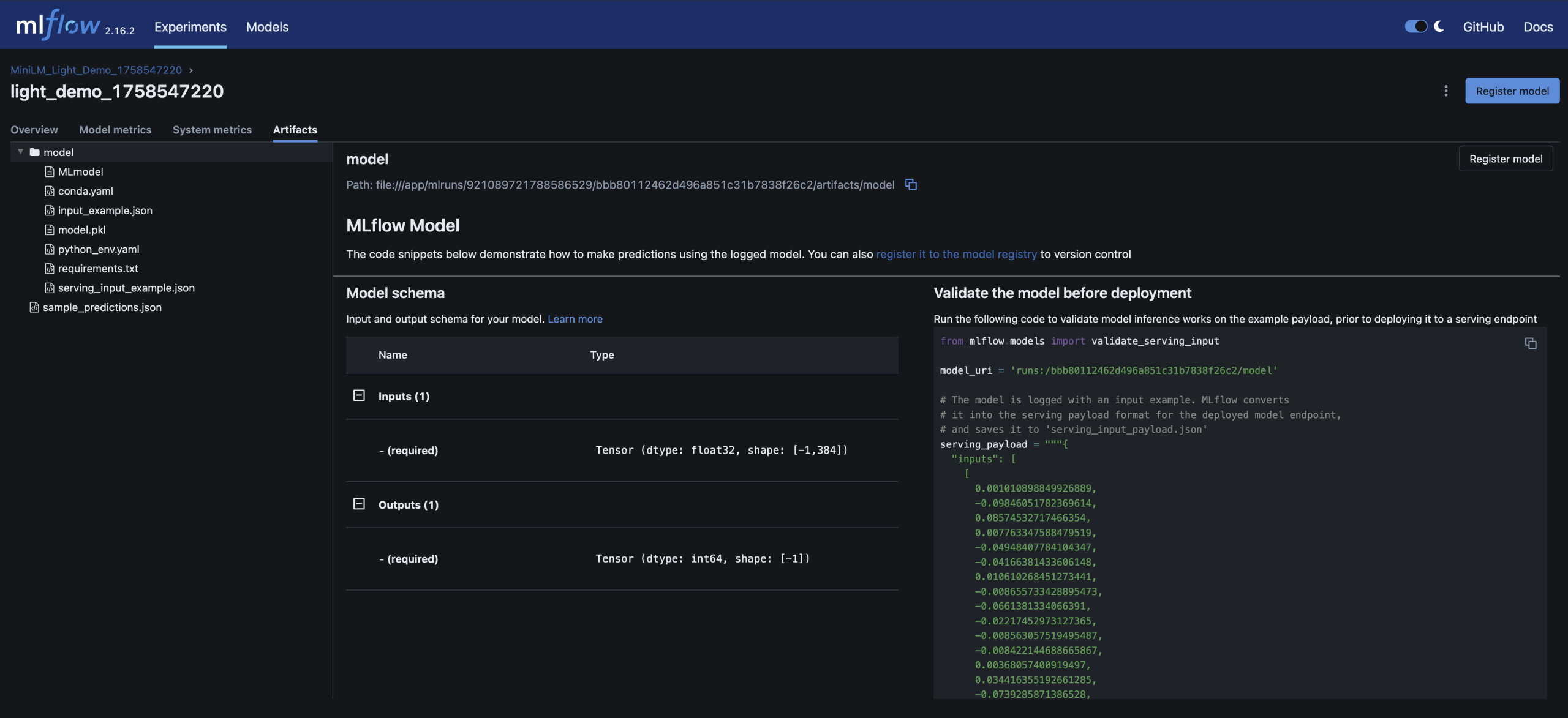
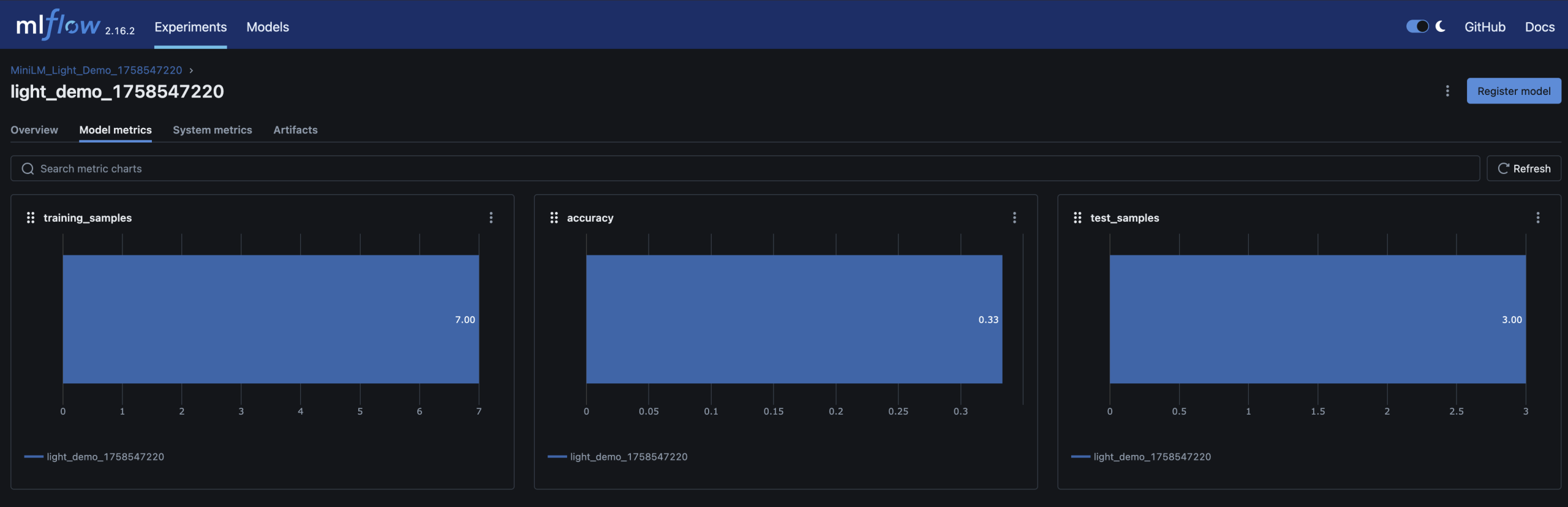
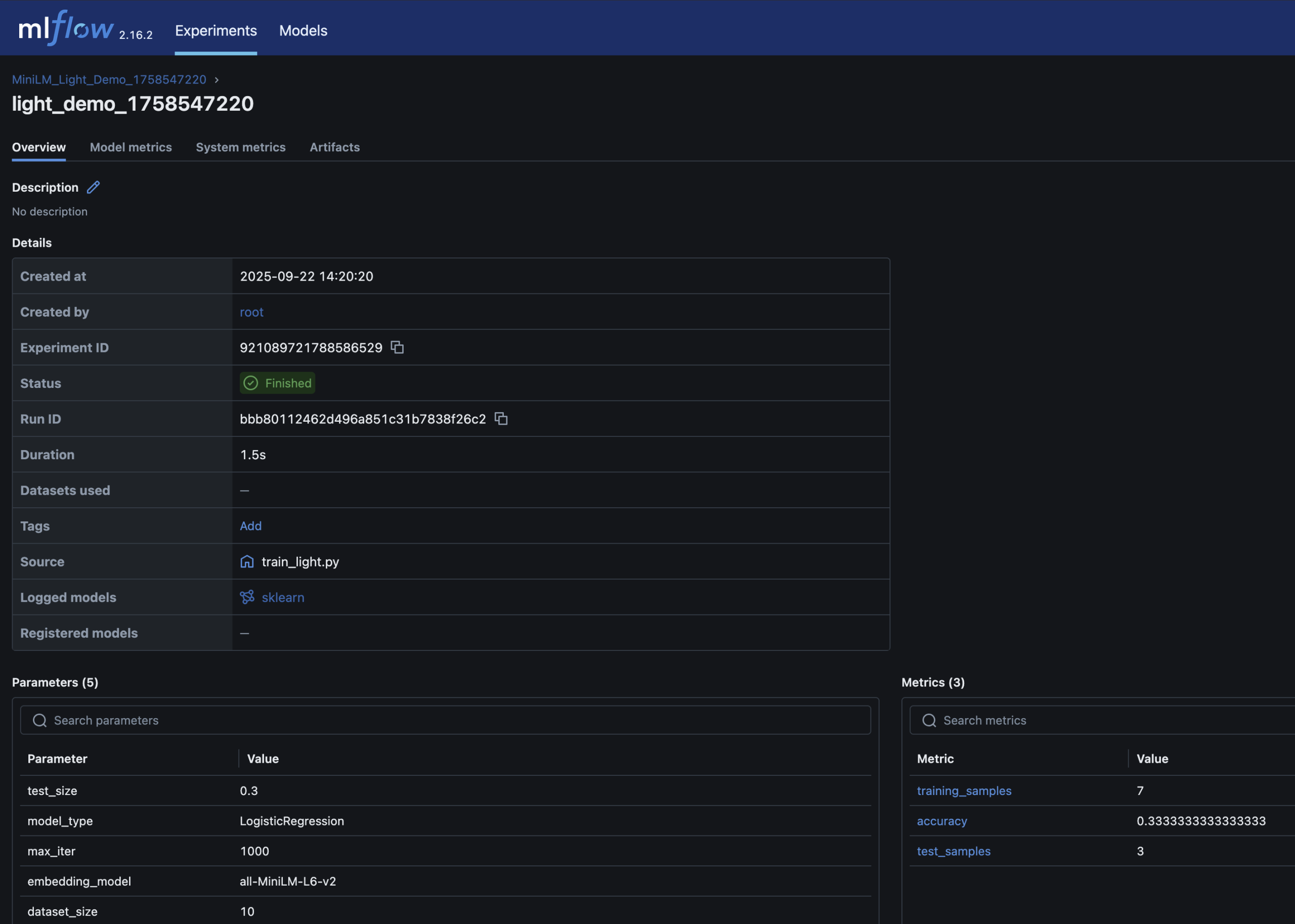
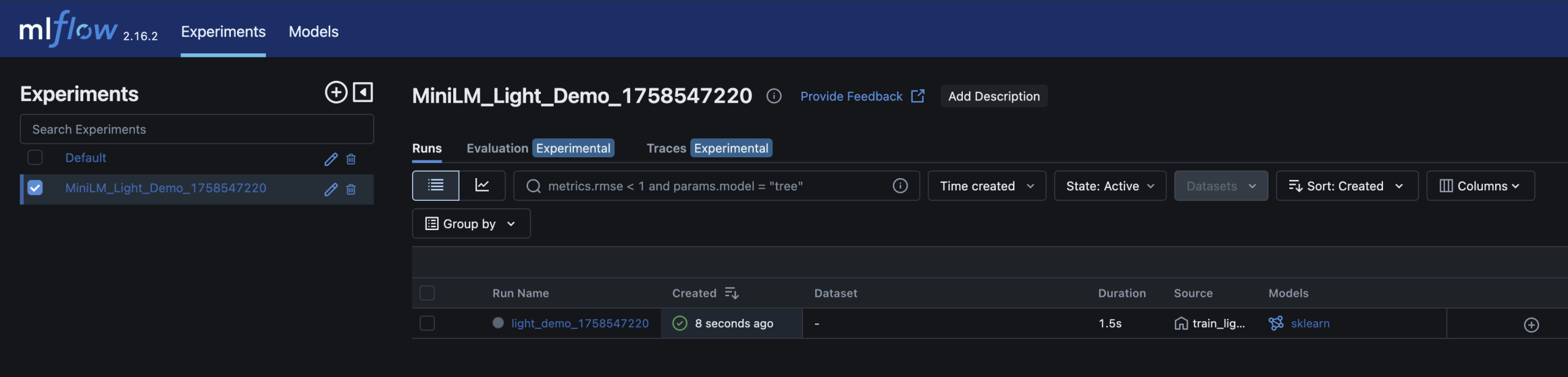
- Parameters, metrics (accuracy), and the trained model are logged in MLflow
- Runs can be inspected and compared in the MLflow UI, similar to CI artifacts
- Run detail, metrics, and model artifact stay together for traceability
Relevant MLflow UI screenshots:
Why this matters for DevOps engineers
- Familiar workflow: MLflow feels similar to CI systems for models
- Quality gates: models can be promoted only when metrics pass thresholds
- Reproducibility: datasets, parameters, and artifacts are tied to runs
- Scalability: this pattern scales from demo to production workflows
Other ways to run it
If you prefer a different execution path, the repo also supports:
- Python virtualenv: install
requirements.txtand runtrain_light.py - Docker Compose:
docker-compose up --build - Make targets:
make train_light(quick) andmake train(full)
Next steps
Once comfortable with this demo, natural extensions are:
- Swap in real datasets such as DVLA MOT data
- Add data validation gates (for example Great Expectations)
- Introduce fairness checks with tools such as Fairlearn
- Run in Kubernetes (KinD/Argo) for reproducible orchestration
- Integrate GitHub Actions for end-to-end CI/CD
Closing thoughts
DevOps and MLOps share the same DNA: versioning, automation, observability, and reproducibility. This demo repo is a practical bridge between the two.
Working on CarHunch provided the real-world context; this demo distills that into something any DevOps engineer can run locally.
Try it out: github.com/DonaldSimpson/mlops_minilm_demo